
Important Information: The information on this page is provided for general educational purposes only. It is not medical advice and should not be relied on as such. Always seek guidance from a qualified healthcare professional in your country of residence. Product mentions are for informational purposes only and do not constitute endorsements or guarantees of suitability or safety. For more details, see our full Disclaimers.
Blood Pressure Monitors
Explore Active Heart Health’s evidence-based reviews of home blood pressure monitors. Devices are grouped by whether they use an app and by their main design or
feature differences.
Not sure which type of monitor to consider?
Blood pressure monitors without an app
These monitors work as standalone devices and do not require a smartphone or app. Readings can be viewed and stored directly on the monitor.
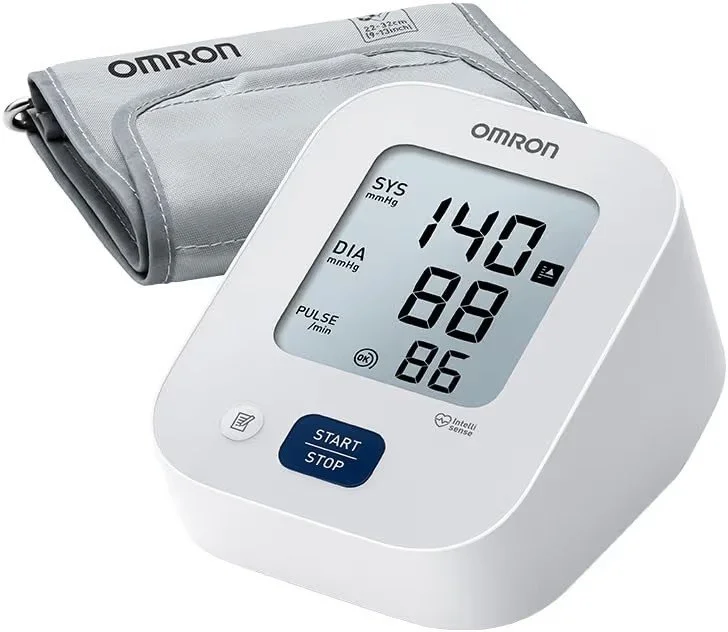
OMRON X2 Essential
Active Heart Confidence Score: 72/100
Device type: Upper arm monitor — no app required
Soft upper-arm cuff for arm sizes 22–32 cm
Cuff wrap guide and body movement detection
Irregular heartbeat and high blood pressure indicators
Stores up to 30 readings for one user
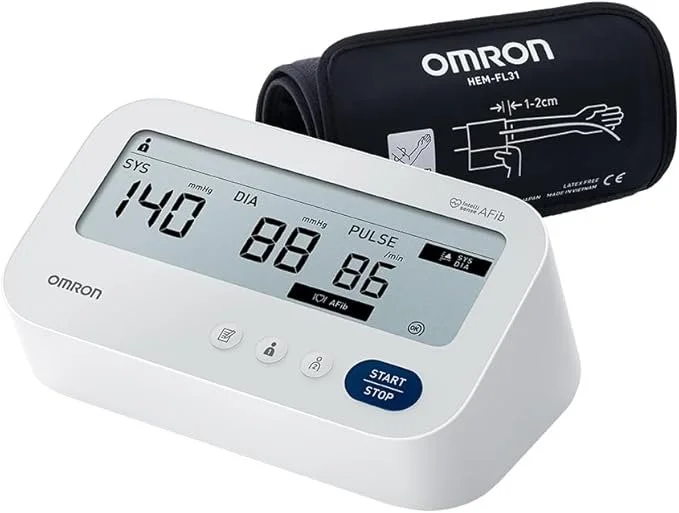
OMRON X3 Comfort AFib
Active Heart Confidence Score: 81/100
Device type: Upper arm monitor — no app required
Intelli Wrap Cuff for arm sizes 22–42 cm
Atrial fibrillation screening, cuff wrap guide and body movement detection
Optional three-measurement mode with an average result
Stores 60 readings each for two users
App-connected blood pressure monitors with essential features
These monitors provide key features for home blood pressure monitoring, with optional app connectivity to store and review readings over time.
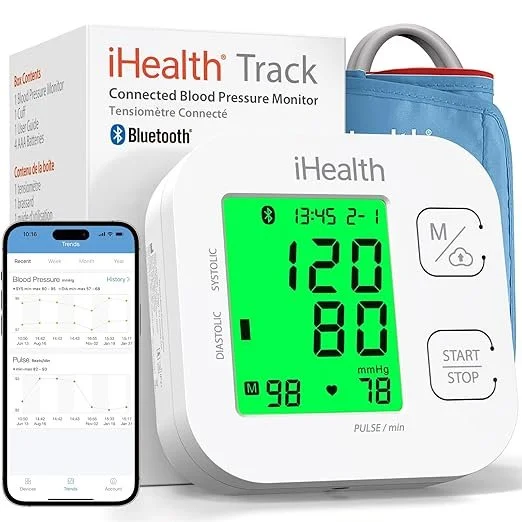
iHealth Track
Active Heart Confidence Score: 74/100
Device type: App-connected upper-arm monitor
Upper-arm cuff for arm sizes 22–42 cm
Colour-coded display and irregular heartbeat detection
Stores up to 99 readings for one user
Optional Bluetooth syncing with the iHealth MyVitals App
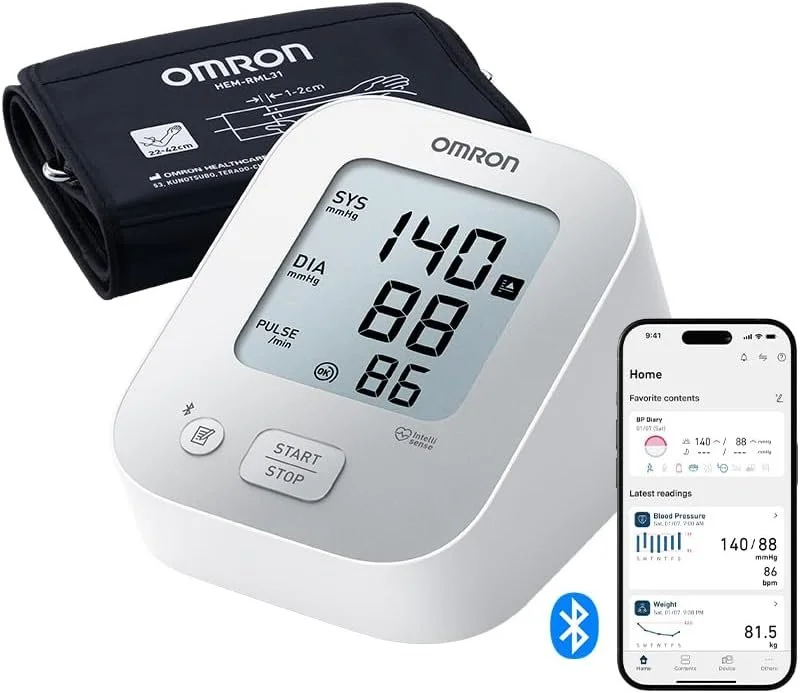
OMRON X2+ Connect
Active Heart Confidence Score: 75/100
Device type: App-connected upper-arm monitor
Soft upper arm cuff for arm sizes 22–42 cm
Cuff wrap guide and body movement detection
Irregular heartbeat and high blood pressure indicators
Stores 30 readings for one user and syncs with the OMRON Connect App
App-connected blood pressure monitors with advanced features
These monitors add features such as atrial fibrillation screening, guided multiple measurements, larger memory capacity or more detailed on-device comparisons, alongside app connectivity.
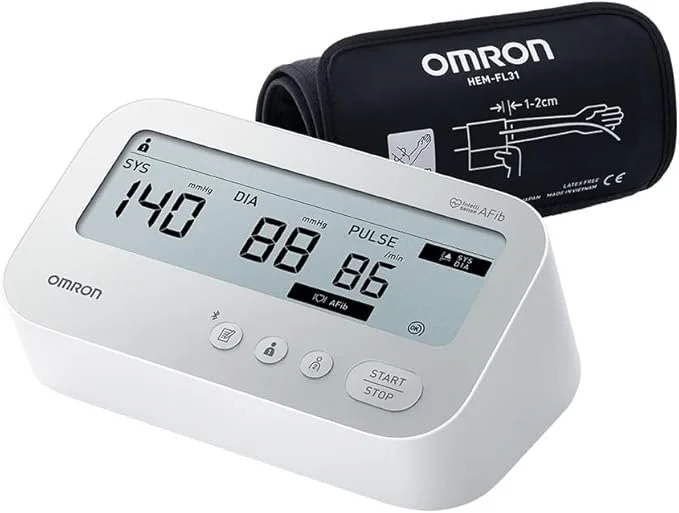
OMRON X4 Connect AFib
Active Heart Confidence Score: 79/100
Device type: App-connected upper-arm monitor
Intelli Wrap Cuff for arm sizes 22–42 cm
Atrial fibrillation screening, cuff wrap guide and body movement detection
Optional three-measurement mode with an average result
Stores 60 readings each for two users and syncs with the OMRON Connect App
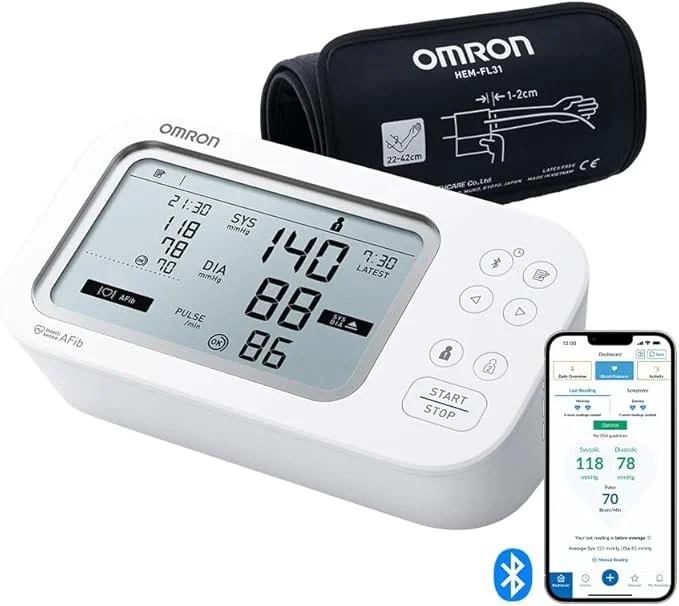
OMRON X7 Smart AFib
Active Heart Confidence Score: 81/100
Device type: App-connected upper-arm monitor
Intelli Wrap Cuff for arm sizes 22–42 cm
Atrial fibrillation screening, cuff wrap guide and body movement detection
Dual display compares the latest and previous readings
Stores 100 readings each for two users and syncs with the OMRON Connect App
Portable, tubeless blood pressure monitors
These compact monitors combine the cuff and measuring unit in a single design, without a separate tube. They may be particularly useful where storage space and portability are important.
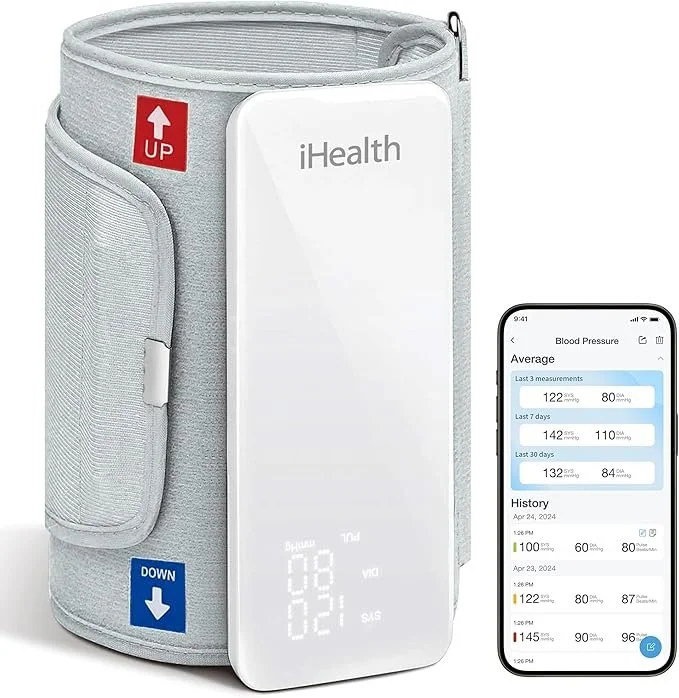
iHealth Neo
Active Heart Confidence Score: 64/100
Device type: App-connected tubeless upper-arm monitor
Compact one-piece design with no separate tube
Integrated cuff for arm sizes 22–42 cm
Irregular heartbeat detection and measurement during inflation
Rechargeable battery, stores 200 readings and syncs with the iHealth MyVitals App
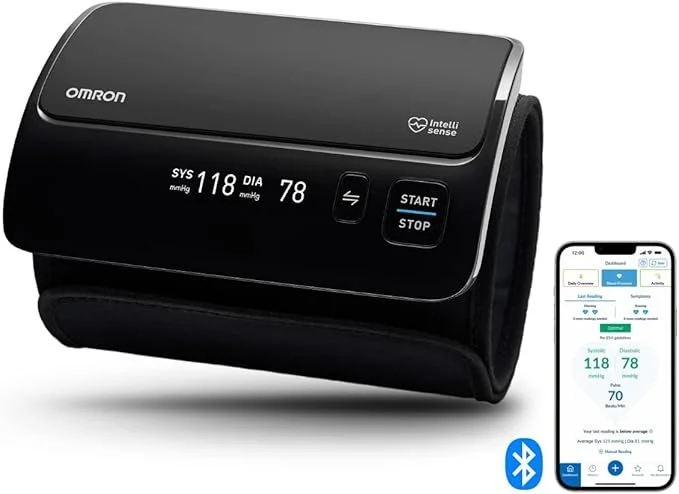
OMRON Evolv
Active Heart Confidence Score: 76/100
Device type: App-connected tubeless upper-arm monitor
Compact one-piece design with no separate tube
Integrated Intelli Wrap Cuff for arm sizes 22–42 cm
Irregular heartbeat and body movement detection
Stores 100 readings and syncs with the OMRON Connect App
App-connected blood pressure monitors with ECG
These devices combine upper-arm blood pressure measurement with a single-lead ECG for recording additional heart rhythm information. A compatible smartphone and app may be required to use the ECG feature.
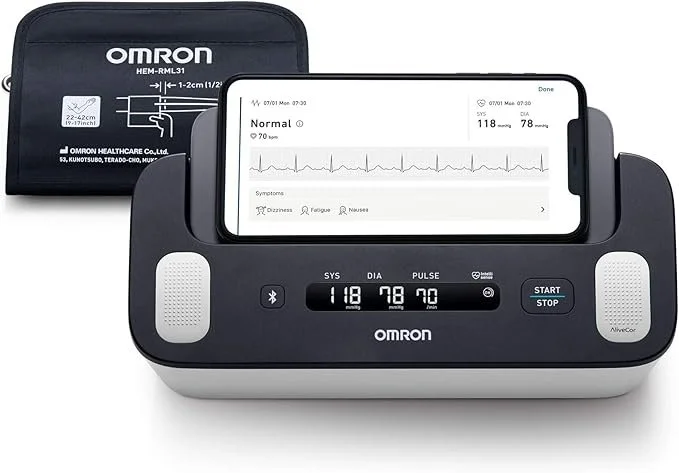
OMRON Complete
Active Heart Confidence Score: To be assessed
Device type: App-connected blood pressure monitor with ECG
Combines upper-arm blood pressure monitoring with a single-lead ECG
Soft upper arm cuff for arm sizes 22–42 cm
ECG analysis can flag signs of possible atrial fibrillation
Stores 90 blood pressure readings
A smartphone and the OMRON Connect App are required for ECG recordings
Not sure which type of monitor to consider?
More blood pressure monitor reviews are on the way, including devices from additional manufacturers.
Content last reviewed: July 2026
Next scheduled review: January 2027
We also review content sooner when important evidence, clinical guidance or safety information changes.