
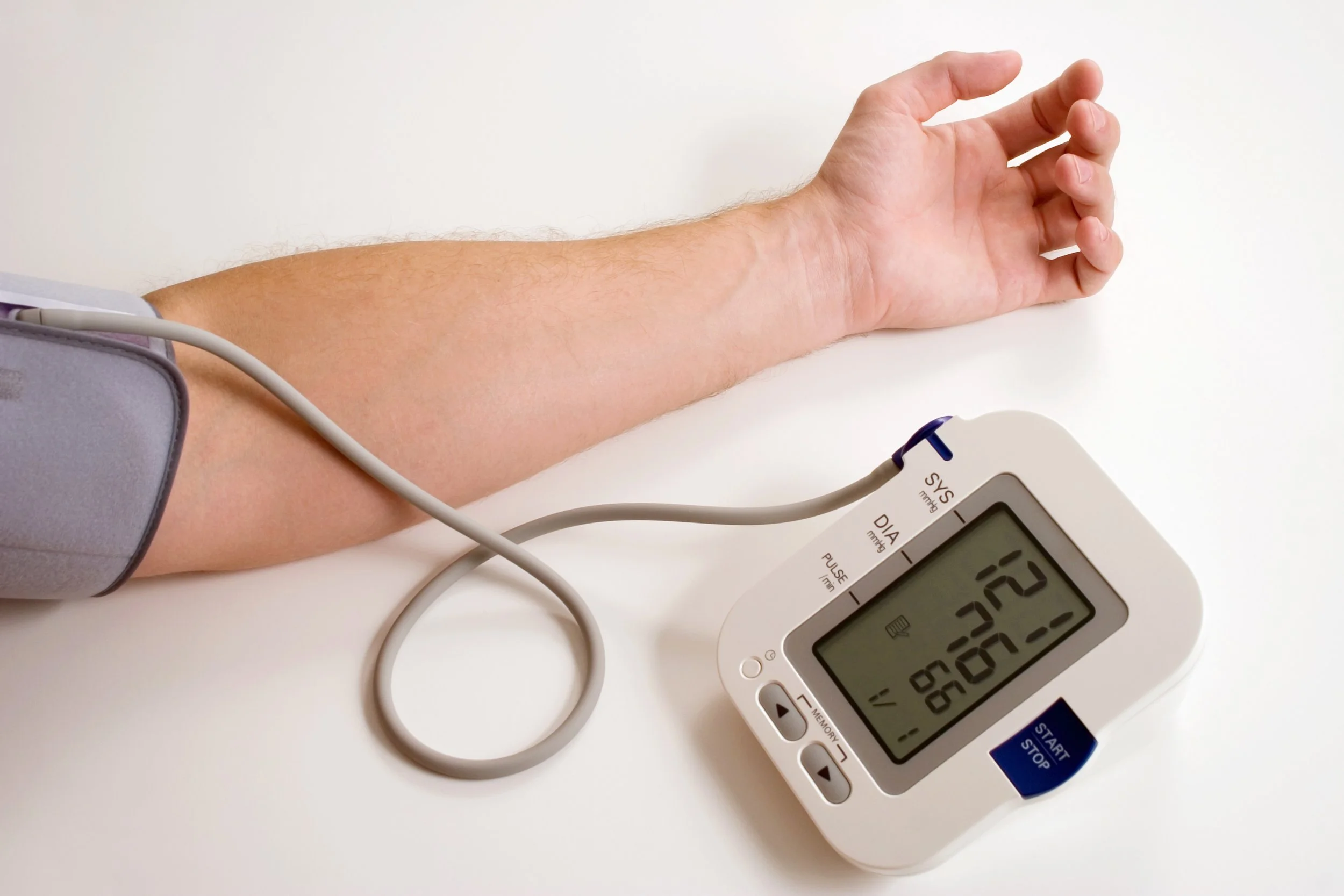
Blood Pressure Monitors Guide
How to choose a trustworthy home blood pressure monitor — from clinical validation and cuff size to apps and other useful features.
Written by Ian Murray, Cardiac Physiologist
Buying a home blood pressure monitor can be confusing. Many devices look similar, but important differences in clinical validation, cuff size, usability and additional features can make them quite different in practice.
Price and feature count alone do not tell you how trustworthy or useful a monitor will be.
Start with three things: clinical validation, cuff fit and ease of use. Once those are right, consider whether features such as automatic averaging, app connectivity or heart-rhythm detection would be useful to you.
This guide explains what to check before you buy.
If you are new to blood pressure and want to understand what the numbers mean and why knowing them matters, start with our guide to High Blood Pressure.
Quick overview
Use the links below to jump to the section you need:
Important: This page is for general education and does not replace medical advice. If you’re worried about your blood pressure, speak with your doctor or a qualified healthcare professional.
Clinical validation: the first thing to check
Two blood pressure monitors can look almost identical yet have very different evidence behind them.
A clinically validated monitor has been assessed using a recognised scientific testing procedure to check whether it measures blood pressure accurately enough for its intended use. In some cases, an expert validation body may also accept a device as equivalent to another model that has undergone appropriate testing. [1–4]
Customer ratings, professional-looking packaging and phrases such as “medical grade” or “clinically accurate” do not prove that a device has passed recognised validation testing.
In practical terms, clinical validation gives you greater confidence that a monitor can provide trustworthy readings when it is used correctly.
A 2023 international study of popular blood pressure devices sold online found that most of the devices assessed had not been clinically validated. → View the study abstract
This does not prove that every unvalidated monitor is inaccurate. It means there may be insufficient evidence showing that its measurements can be relied upon.
UK and European guidance recommends using clinically validated devices for home blood pressure measurement. [1-4]
So before comparing screens, apps or additional features, ask:
Has this exact monitor been clinically validated?
Check the exact model before you buy
Validation applies to the specific monitor model, not simply to the manufacturer or brand.
Manufacturers often sell several similarly named devices within the same product range, sometimes with different model numbers or country-specific versions. Do not assume that evidence for one model automatically applies to another.
Before buying, check the exact model number against a recognised validation source:
STRIDE BP (European Society of Hypertension co‑sponsored): a searchable international database of validated blood pressure monitors
British & Irish Hypertension Society (BIHS): provides information on validated devices for UK and Irish users
German Hypertension League (Deutsche Hochdruckliga): provides certified blood pressure monitor information for the German market
Medaval: provides searchable information on validation evidence for blood pressure monitors (useful for cross‑checking validation evidence)
These are external sites. Device availability and model names can differ between countries, so always search using the exact model number.
If you would rather go straight to monitors we have assessed for clinical validation and practical usability:
Upper‑arm vs wrist monitor?
Clinical validation matters, whichever type of blood pressure monitor you choose.

Upper-arm cuff monitors
For routine home blood pressure measurement, a clinically validated upper-arm monitor is generally preferred where one can be used comfortably. [1–4]
Upper-arm devices are widely used for home and clinical measurements and are generally less sensitive to positioning errors than wrist monitors.

When might a wrist monitor be useful?
A clinically validated wrist monitor can be an alternative when an upper-arm cuff is difficult or unsuitable to use.
The main limitation is positioning. Wrist measurements are particularly sensitive to the height of the wrist, which needs to remain still and approximately level with the heart during measurement.
Bottom line: If you can comfortably use a clinically validated upper-arm monitor, that is generally the preferred choice. If you cannot, a clinically validated wrist monitor may provide an alternative.
Check the cuff size
Cuff fit is not simply about comfort. Using a cuff that is too small or too large can affect the blood pressure measurement. [1–4]
Before buying an upper-arm monitor, measure around your upper arm and check that your measurement falls within the manufacturer's stated cuff range — for example, 22–42 cm.
Do not assume a cuff will fit simply because the monitor is described as suitable for adults.
If your arm circumference falls outside the supplied cuff's range, check whether the manufacturer offers a compatible cuff in your size. If not, consider a different monitor.
Choose a monitor you will find easy to use
A monitor can have strong validation evidence and useful technology but still be frustrating if the controls, display, or cuff are difficult for you to use.
Think about the device as something you may need to operate repeatedly at home.
Is the display large and clear enough to read easily? Would a backlit display help? Can you start a measurement without navigating complicated menus? Is the cuff easy to position and fasten by yourself?
Some monitors also display the previous result or a recent average alongside the latest measurement.
The important question is simple: will this monitor make regular home measurement straightforward for you?
Once you have checked validation, cuff fit, and usability, you have the information needed to start comparing suitable models.
How will you store your readings?
Blood pressure monitors range from devices that display and store results on the device to app-connected models that can send measurements to a phone or tablet.
Neither approach is automatically better. What matters is how you want to keep your readings.
Built-in memory
Built-in memory allows you to look back at previous measurements without writing them down immediately.
If two people will use the same monitor, look for separate user profiles so that their readings do not become mixed together.
It is also worth checking how many measurements the device stores and whether stored readings include the date and time they were taken. Date and time information makes it much easier to match individual readings to your home blood pressure record.
App-connected monitors
App-connected monitors can make it easier to view trends, keep a longer record, and export or share measurements without entering each result manually.
Connectivity does not make a monitor more accurate. It simply changes how readings are recorded and organised.
Choose the system that fits how you are likely to use the monitor.
Which additional features may be useful?
Once you have checked validation, cuff size and practical usability, additional features can help distinguish between suitable monitors.
Different features serve different purposes. Understanding what each one does makes it easier to decide which are relevant to you.
Cuff-fit and movement indicators
Some monitors warn when the cuff may not be fitted correctly or when movement could have affected the measurement.
These features do not replace good technique, but they can provide useful prompts while measuring at home.
Automatic repeated readings and averaging
Blood pressure naturally varies from one reading to the next.
Some monitors automatically take several measurements in succession and calculate an average. This can make repeated measurements more convenient, although you can also take repeat readings manually.
Heart rhythm indicators
Some blood pressure monitors analyse your pulse while measuring.
A general irregular heartbeat indicator may appear when an irregular pulse pattern is detected. It does not identify which rhythm is present or diagnose a heart-rhythm condition.
Some monitors offer more specific atrial fibrillation (AFib) detection, using an algorithm designed to identify pulse patterns that may be consistent with AFib. This is different from a general irregular-heartbeat alert, so check what the particular model has actually been validated to detect.
Important: Rhythm alerts do not diagnose atrial fibrillation or another heart-rhythm condition. If alerts occur repeatedly or you have symptoms or concerns about your pulse, discuss them with a healthcare professional.
For more information, see our guides to Irregular Heartbeat and Atrial Fibrillation.
Integrated ECG (heart rhythm recording)
A small number of monitors combine blood pressure measurement with a short ECG recording of the heart's electrical activity.
This may be useful if you specifically want blood pressure and rhythm recording in one system, but an ECG is not required for routine home blood pressure measurement and does not replace professional diagnosis or assessment.
Five checks before you buy
Before choosing a home blood pressure monitor, ask yourself:
Has this exact model been clinically validated?
Is an upper-arm monitor suitable for me, or do I need an alternative?
Does the supplied cuff fit my arm?
Will I find the display, controls and cuff easy to use?
Which additional features would be useful for how I plan to monitor and record my blood pressure?
A good buying decision is not about finding the longest specification list. It is about choosing a validated monitor that fits correctly and is practical for you to use regularly.
Compare blood pressure monitors we have reviewed
Active Heart Health reviews a growing selection of home blood pressure monitors.
We look at clinical validation evidence, cuff size and design, usability, measurement safeguards, memory and data handling, app connectivity where relevant, additional features, and the practical strengths and limitations of each model.
We also assess monitors using the Active Heart Confidence Score (AHCS) — our structured editorial scoring system for evaluating the evidence and characteristics of home health technology.
The aim is not to declare one universal “best” monitor. Different devices offer different combinations of features, and different buyers have different priorities.
Our reviews are designed to make those differences easier to understand.
Affiliate disclosure: Some pages linked from this guide contain Amazon affiliate links. If you make a qualifying purchase through those links, Active Heart Health earns a commission at no extra cost to you. This does not determine how devices are assessed or scored.
Already have a monitor? Learn how to measure blood pressure at home, including preparation, positioning and how to collect a useful short series of readings.
Important Information:
This page is provided for general educational purposes only and does not constitute medical advice. Active Heart Health reviews and compares blood pressure monitors but does not determine whether a particular device is suitable for an individual’s medical condition, diagnosis or treatment.
If you have concerns about your blood pressure, heart rhythm or health, speak with your doctor or another qualified healthcare professional. Medical knowledge, product specifications, validation information and device availability can change over time.
For more details, please see our full Disclaimer.
References
National Institute for Health and Care Excellence. Hypertension in adults: diagnosis and management (NG136). Last updated 26 February 2026.
Mancia, G., Kreutz, R., Brunström, M., et al. 2023 ESH Guidelines for the management of arterial hypertension. Journal of Hypertension. 2023;41(12):1874–2071.
Parati, G., Stergiou, G.S., Bilo, G., et al. Home blood pressure monitoring: methodology, clinical relevance and practical application. Journal of Hypertension. 2021;39(9):1742–1767.
McEvoy, J.W., McCarthy, C.P., Bruno, R.M., et al. 2024 ESC Guidelines for the management of elevated blood pressure and hypertension. European Heart Journal. 2024;45(38):3912–4018.
Content last reviewed: September 2026
Next scheduled review: March 2027
We also review content sooner when important evidence, clinical guidance or safety information changes.