
May Measurement Month is an international campaign that encourages more people to check their blood pressure and become more aware of high blood pressure.
It is a useful reminder because blood pressure is not something most people can reliably feel or guess. You can feel completely normal and still have raised blood pressure. That is one reason checking matters.
This does not mean everyone needs to worry. It means blood pressure is worth knowing, especially as we get older.
Blood pressure is not something you can reliably guess
High blood pressure often develops quietly. Some people only discover it during a routine check, a pharmacy check, a doctor appointment, or when they start measuring at home.
A single check can be useful, but it should not be treated as the whole story. Blood pressure naturally changes during the day. It can rise with stress, movement, caffeine, discomfort, talking, or an incorrectly fitted cuff.
Proper measurement matters
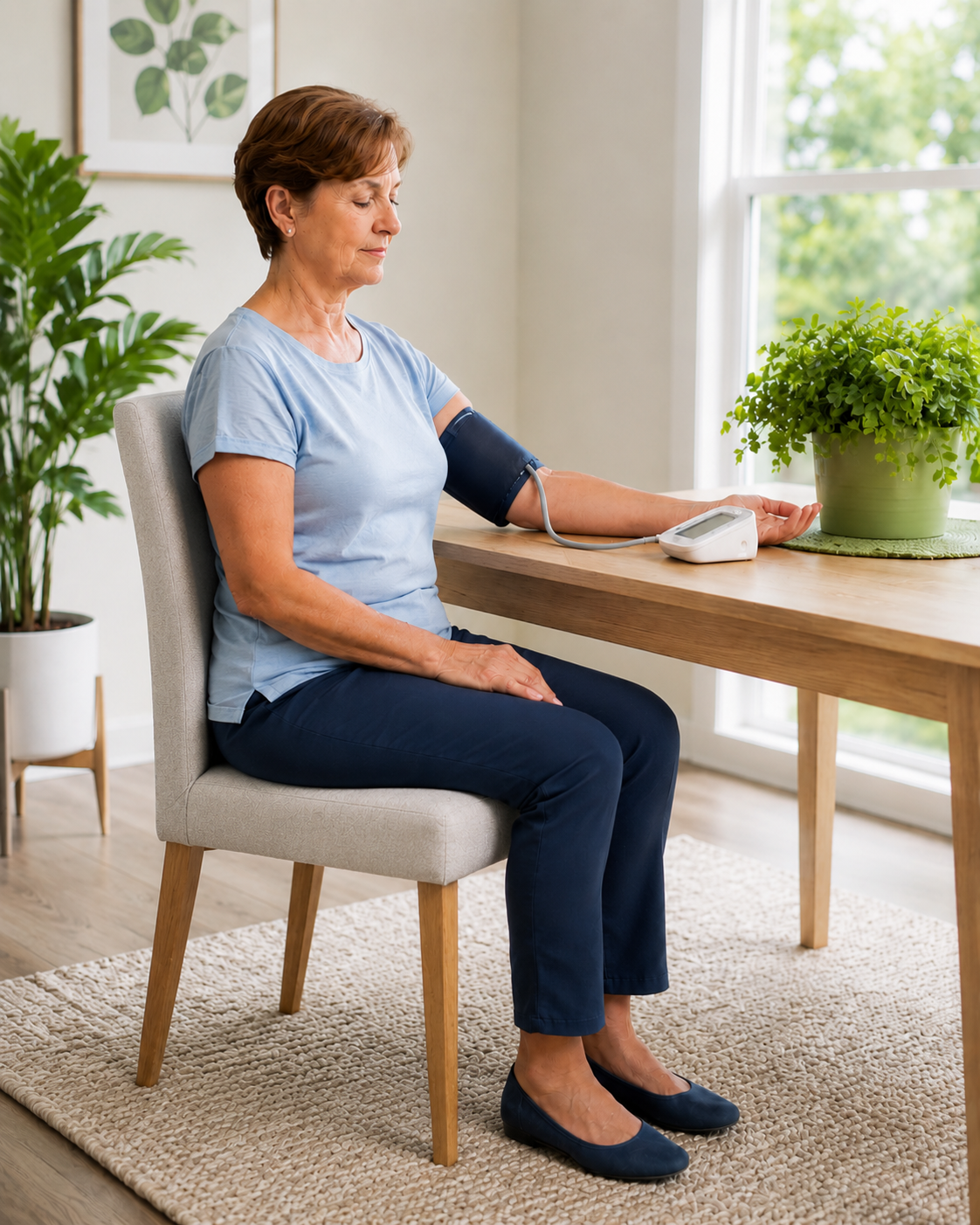
Image: illustrative AI-generated image showing home blood pressure measurement technique.
A blood pressure reading is only useful if it is taken properly.
Before checking, it helps to avoid caffeine, smoking, eating or exercising for 30 minutes beforehand, sit quietly for 5 minutes, keep both feet flat on the floor, support your back and arm, attach the cuff correctly, and avoid talking during the reading. Using the wrong cuff size or rushing the measurement can give a reading that is less reliable.
This is why Active Heart Health regularly focuses on proper technique, not just the number on the screen.
One reading is not the whole story
One high reading does not always mean you have high blood pressure. One normal reading does not always prove everything is fine either.
Repeated readings, taken correctly, give a clearer picture. If readings are repeatedly high, it is sensible to seek advice from a qualified healthcare professional.
Where home monitoring fits
Home blood pressure monitors can help people understand their readings over time. They may also make it easier to notice patterns and discuss those readings with a healthcare professional.
Choosing a monitor should start with the basics: a clinically validated monitor, the right cuff size, cuff fit guidance, body movement detection, averaging of readings, and simple everyday usability.
Useful next steps
May Measurement Month is a good prompt to do something simple: check your blood pressure properly, learn what the numbers mean, and avoid guessing.
To learn more, read our guide to High Blood Pressure.
If you are thinking about buying a monitor, see our Blood Pressure Monitors Guide for practical points to check before choosing one.
