
How the Heart Works
Clear, easy-to-follow explanations of how the heart functions and why that understanding matters.
Written by Ian Murray, Cardiac Physiologist
Every moment of your life, your heart works quietly in the background.
While you read this, it is squeezing, relaxing, and refilling – pushing blood through an extensive network of blood vessels that reaches every corner of your body. It does this automatically and usually without drawing attention to itself.
As we age, changes in heart function can affect our health. Understanding how your heart beats helps explain things like blood pressure and heart rhythm, and why both matter to cardiovascular health.
We will guide you step by step through a heartbeat. No prior medical knowledge is needed, just your curiosity about how your body works.
Video showing the heart beating inside the chest with a steady and rhythmic movement.
Before looking at the heart's individual parts, watch how the whole system works together.
This short video shows a human heart beating inside the chest. The movement is not random – it results from electrical signals, muscle contractions, and pressure changes working together in a precise rhythm. Notice how steady each beat is, repeating thousands of times per day.
Quick overview
Use the links below to jump to the section you need:
Heart anatomy: A guided tour inside your heart
To understand how your heart beats, it helps to know how it is built.
Rather than thinking of the heart as a single solid muscle, imagine it as a small house with four rooms, one-way doors, and its own fuel supply. Each part has a specific role, and all of them must work together smoothly for every heartbeat.
The four chambers – The heart’s rooms
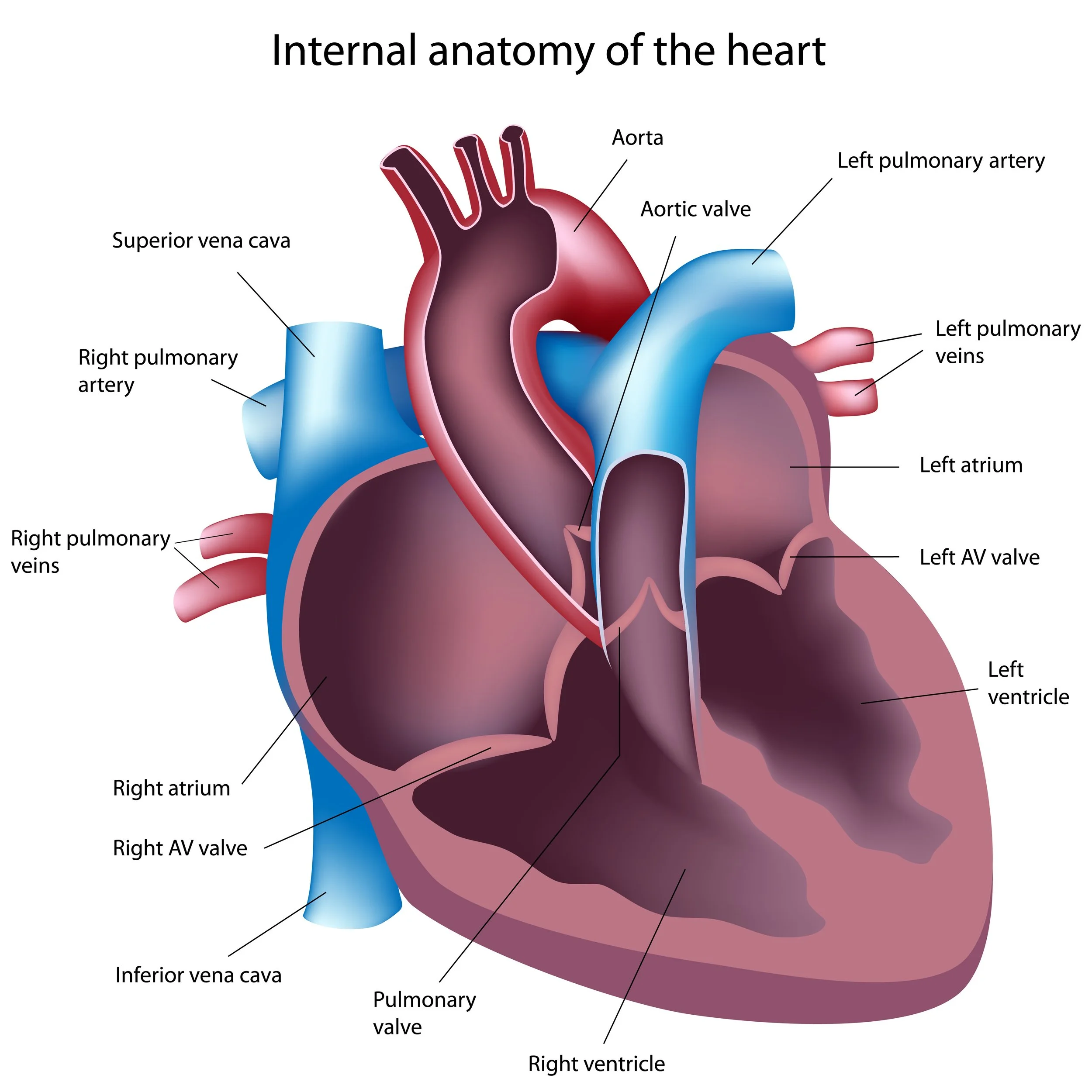
A normal heart is divided into four chambers, each of which has a specific role.
The two upper chambers are called the atria. Their main job is to receive blood:
The right atrium collects blood returning from the body.
The left atrium collects oxygen-rich blood returning from the lungs.
Below these are the two lower chambers, called the ventricles. These are the heart’s main pumping chambers:
The right ventricle pumps blood to the lungs (where it picks up oxygen).
The left ventricle pumps blood out to the rest of the body (supplying organs and muscles with oxygen-rich blood).
All four chambers work together, but the ventricles do the heaviest lifting — especially the left ventricle.
One-way valves – The heart’s doors
The heart contains four valves. Two sit between the atria and ventricles, while two control blood leaving the ventricles.
These valves act like one-way doors: they open to let blood move forward and close to stop it from flowing backwards. They respond automatically to pressure changes inside the heart, opening and closing at the right moments during each heartbeat.
When the valves are working well, blood flows smoothly and efficiently through the heart.
The left ventricle – The main pump
The left ventricle has the thickest muscle wall of the heart’s four chambers.
Its job is demanding: it must generate enough force to pump oxygen-rich blood into the arteries supplying the rest of the body.
The heart’s own blood supply
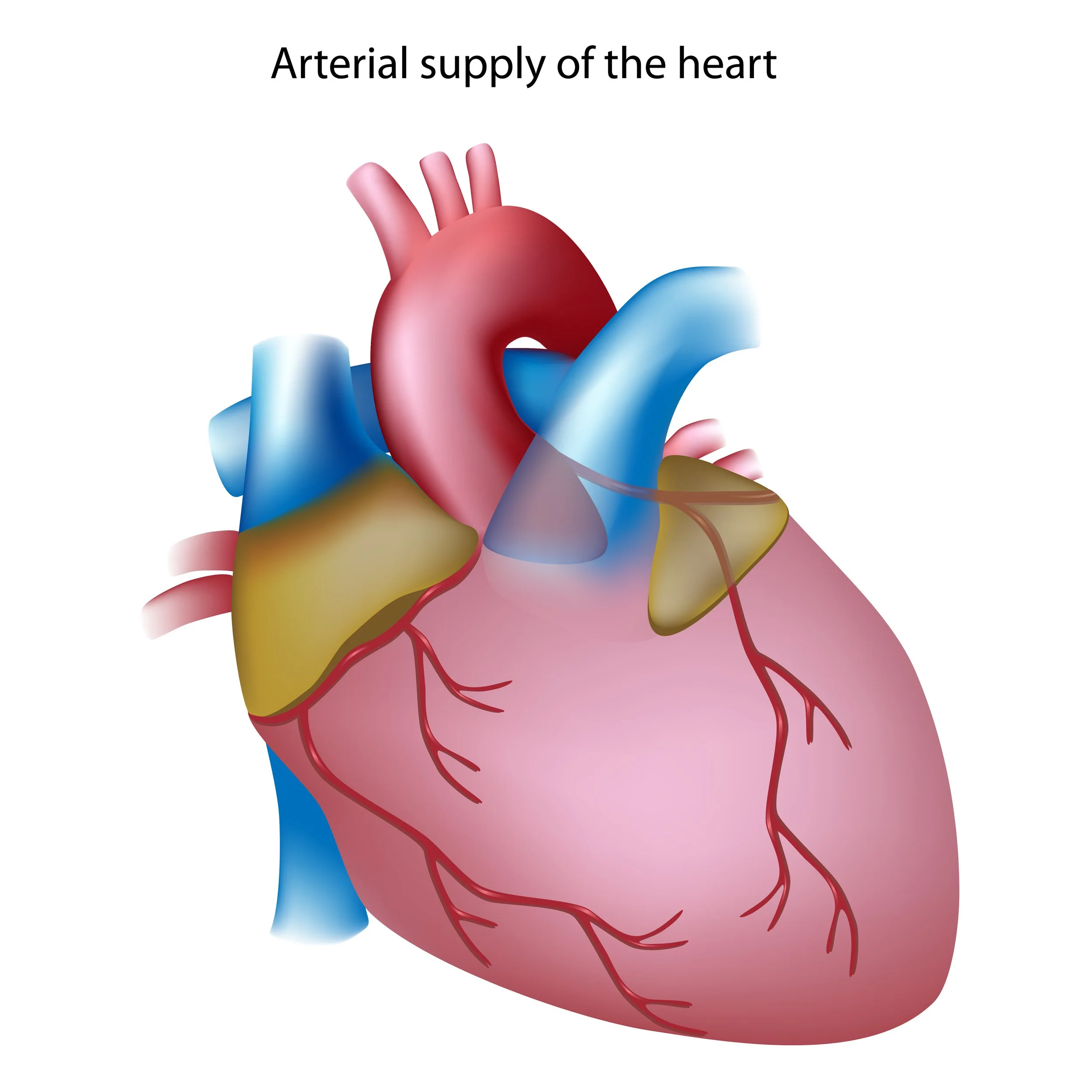
Like any muscle, the heart needs its own supply of oxygen and nutrients to keep working.
This is delivered by the coronary arteries, which branch off from the body’s main artery (the aorta) and wrap around the outside of the heart. These arteries supply blood directly to the heart muscle itself.
If the coronary arteries become narrowed or blocked, the heart muscle may not get enough oxygen, which can affect how well the heart works.
But structure alone does not make the heart beat; its contractions are coordinated by a built-in electrical system.
The heart’s electrical system: What coordinates each heartbeat
Every heartbeat is triggered by a small electrical signal telling the heart muscle when to contract (squeeze) and when to relax. Without this signal, the heart muscle would not squeeze in a coordinated way.
This built-in electrical system works automatically throughout life, coordinating your heartbeat whether you are asleep, walking or exercising.
The heart’s natural pacemaker
Each electrical signal begins in a small area high in the heart, often described as the heart’s natural pacemaker.
From here, the signal spreads across the two upper chambers, causing them to contract and gently push blood down into the lower chambers.
This first step prepares the heart for the main pumping action that follows.
Video showing an electrical signal starting high in the heart, spreading across the atria, pausing briefly between the upper and lower chambers, then travelling rapidly through the ventricles.
A brief pause, then a powerful squeeze
After the upper chambers contract, the electrical signal reaches a control point between the upper and lower chambers.
Here, there is a very brief pause. This brief delay gives the ventricles extra time to fill before they contract.
Once past this point, the electrical signal travels rapidly through the walls of the lower chambers, triggering a strong, coordinated squeeze that pushes blood out of the heart and into the arteries.
Ready for the next beat
After each electrical cycle, the heart resets, ready for the next beat. This repeating sequence helps produce its regular rhythm.
Most of the time, you’re completely unaware that this system is working, which is exactly how it should be. If you’d like to understand what it means when that rhythm feels uneven, read our guide to irregular heartbeat.
Electrical signals on their own do not move blood; their job is to set the timing.
Once the signal is given, the heart muscle responds by contracting and relaxing.
Muscle contraction: How the heart pushes blood around your body
The heart is a powerful muscle. With every heartbeat, its muscular walls contract and relax. As they contract, the chambers become smaller and push blood forward. As they relax, the chambers refill, ready for the next beat.
The ventricles do most of the pumping. As they contract, they push blood into the arteries, carrying oxygen and nutrients around the body.
This pumping action also creates pressure inside the arteries.
Video showing blood flow through the heart. Blood fills the atria before flowing into the ventricles. The ventricles soon contract, pumping blood out of the heart.
Feeling your pulse
You can feel each heartbeat without any equipment.
When the heart pumps, it sends a pressure wave along the arteries. This wave is what you feel as your pulse.
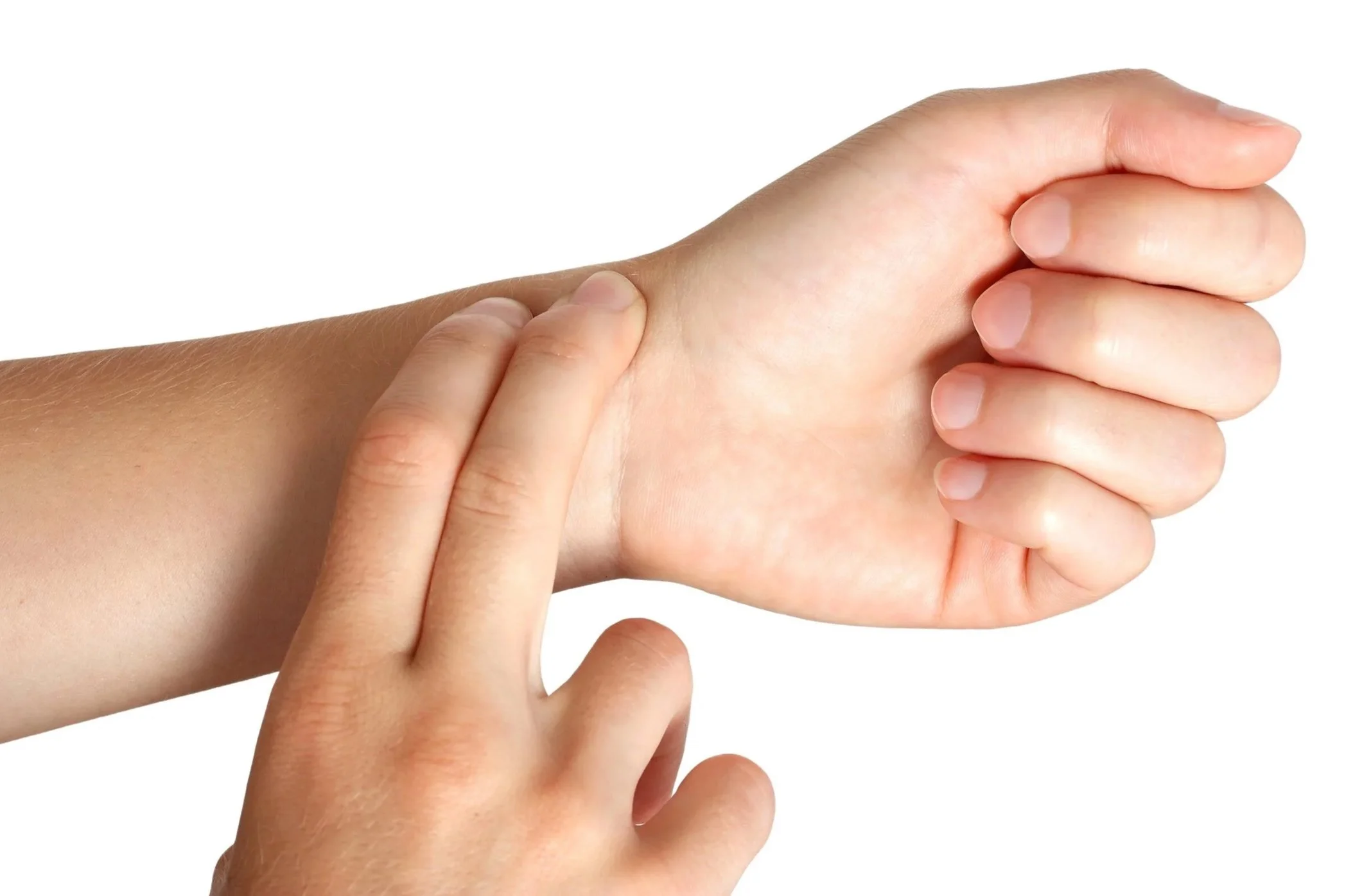
You can check your pulse in places where an artery runs close to the skin, such as the wrist or the side of the neck (as shown in the images).
If you place two fingers lightly on one of these spots, you're not feeling the heart itself — you're feeling the pressure wave produced by each heartbeat.

Try this for yourself:
Sit quietly for a moment and gently feel your pulse.
Notice whether the beats feel evenly spaced and similar to one another. If your pulse feels uneven or unusually fast or slow, our irregular heartbeat guide explains what that can mean.
Blood pressure: Why each heartbeat creates pressure
Each time the left ventricle contracts, it pushes blood into the arteries, increasing the pressure inside them. As the heart relaxes and refills, the pressure falls. This rise and fall happens with every heartbeat, all day and night.
Two numbers, one cycle
Blood pressure is described using two numbers, reflecting two phases of each heartbeat:
Systolic blood pressure is the higher number. It measures the pressure in your arteries when the heart contracts and pushes blood out.
Diastolic blood pressure is the lower number. It measures the pressure in your arteries while the heart is resting and refilling between beats.
Together, these numbers describe the pressure in your arteries during and between heart contractions.
Why blood pressure matters
Blood pressure needs to be high enough to keep blood flowing to vital organs like the brain and kidneys. But when it remains too high over time, it can place additional strain on the heart and blood vessels.
High blood pressure often causes no obvious symptoms, which is one reason measurement matters.
Measuring blood pressure at home
For step-by-step guidance on technique, see our How to Measure Blood Pressure at Home guide.
Our Blood Pressure Monitors Guide explains what to look for when choosing a device.
Key Takeaways: How your heartbeat, blood pressure, and health are connected
The heart’s electrical system coordinates each heartbeat.
The heart muscle contracts and relaxes to move blood.
Each contraction pushes blood into the arteries.
The resulting rise and fall in arterial pressure is what we measure as blood pressure.
Next, find out what high blood pressure is, why it develops and why detecting it matters.
This page is part of a series designed to help you better understand your heart and blood pressure.
Important Information:
This page is provided for general educational purposes only and does not constitute medical advice. Medical knowledge and guidance evolve over time, and information may change. Always seek advice from a qualified healthcare professional regarding personal health concerns or medical decisions.
For more details, please see our full Disclaimer.
Sources and further reading
This page draws on established cardiovascular anatomy and physiology, together with current UK and European guidance on blood pressure. Key sources include:
British Heart Foundation (2024) How your heart works. Accessed: 07 September 2026.
National Institute for Health and Care Excellence (NICE). Hypertension in adults: diagnosis and management (NG136). Last updated 26 February 2026.
European Society of Cardiology. 2024 ESC Guidelines for the management of elevated blood pressure and hypertension. European Heart Journal. 2024;45(38):3912–4018.
Content last reviewed: September 2026
Next scheduled review: March 2027
We also review content sooner when important evidence, clinical guidance or safety information changes.